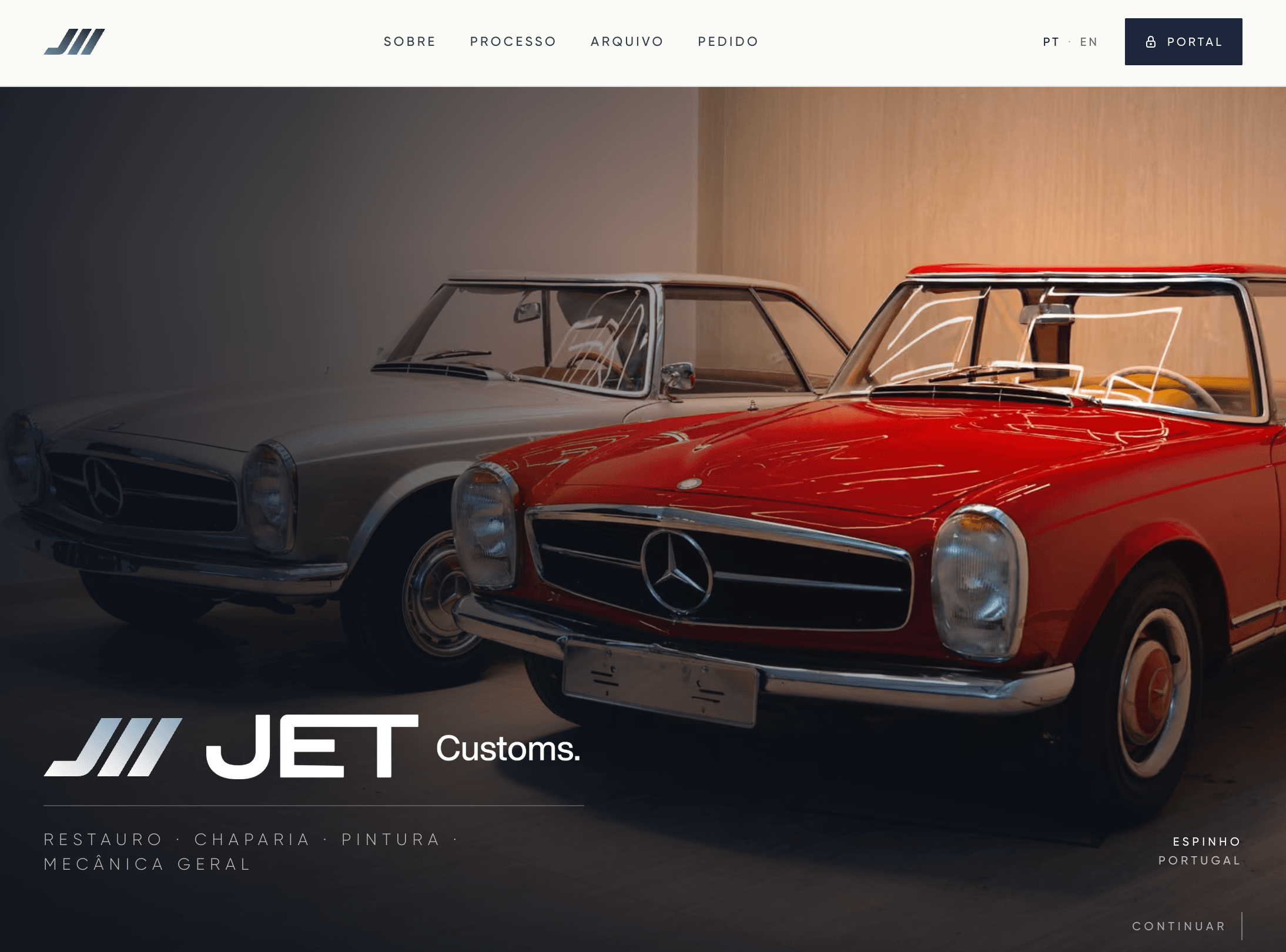
JetCustoms: a designed prototype made production-ready.
- 100
- Performance
- 100
- Accessibility
- 100
- Best practices
- 100
- SEO
The challenge
The shop had designed the site themselves with Claude Design and handed us a single HTML file: a working prototype of the design, in one language. It looked right on the laptop it was made on. It had to become a real site — every page, both languages, content the owners could change, and it had to hold up on every screen size.
What we did
We kept the design and rebuilt everything underneath it. The prototype became a Next.js app, prerendered per language and fed from the CMS in their back office. We tested every page across phone, tablet and desktop widths and fixed what the prototype never had to face: wrapping, touch targets, slow connections, keyboard navigation. Then the invisible parts — metadata, structured data, sitemap, robots, preview mode, analytics — and a deploy pipeline with separate preview and production.
What changed
| Area | Prototype | Production |
|---|---|---|
| Languages | Portuguese | Portuguese and English, with hreflang alternates |
| Content | Hardcoded | Edited in the CMS, drafts previewed on the real site, published in one click |
| Screens | One laptop | Tested from 320px phones to wide desktops |
| Images | One embedded JPEG | Optimised, responsive, served from storage behind a CDN |
| Search engines | Nothing | Metadata, structured data, sitemap, robots, llms.txt |
| Accessibility | Untested | Skip link, keyboard navigation, focus order, contrast |
The result
- 4 × 100
- Lighthouse, across the board
- 320px+
- every width tested, phone to desktop
- 0
- design changes — their design, shipped as-is
The technical write-up
The same rebuild, written for an engineer: everything a prototype is never asked for, and what it takes to hold a design still while replacing everything underneath it.
Read it on Corvale EngineeringStart with a straight answer.
A fixed-price technical assessment, with no commitment afterwards. Or simply book a call.